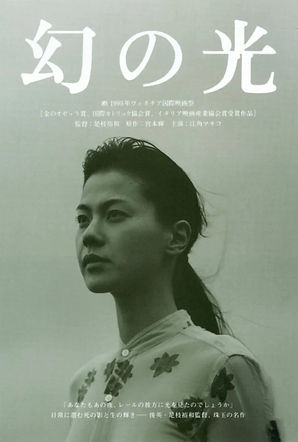
Precise Chaos — Hirokazu Kore-eda’s Maborosi
The first thing I ever said to Hirokazu Kore-eda was: my favorite film of yours is Maborosi.
He did not reply. He silently signed his name in my notebook. Many years have passed. After following his films for so long, if I ever had the chance to say a second thing to him, it might be: the film of yours I miss most is Maborosi.
Kore-eda’s later works are, of course, all compelling in their own ways, from Nobody Knows and Still Walking to Asura. He has continued to look at the presence of death within life. Kore-eda has said, in effect, that in contrast to the absence of an absolute God, everyday life retains an ethical sense of living in a way that does not shame us before the eyes of the dead. The dead do not simply disappear; they stand outside and criticize our lives, taking on the function of ethical norms. Those who stand outside the story and criticize us are the dead; those who stand inside and criticize us are the children.
And yet his works have become increasingly smooth. The folds of reality unfold their shadows too quickly. The beauty and depth of Maborosi lie in letting things happen, whereas his later films make things happen. They are too consciously skilled at producing the meaning of details and the tension of conflict, and the resonance they leave behind feels too thin to me. A blade whose direction is too clear cuts a wound with too refined a shape. But between the exquisite image compositions and editing sequences of Maborosi, something remains chaotic and unresolved—the wound winds and swells until it exceeds the borders of consciousness.
A mystery cannot be solved. Not the kind of cannot that comes from unwillingness, but from the absence of any ability to do so.
Perhaps what I care about more is how cinema uses visible things to protect invisible things, how it uses blankness and silence to preserve mystery and depth.